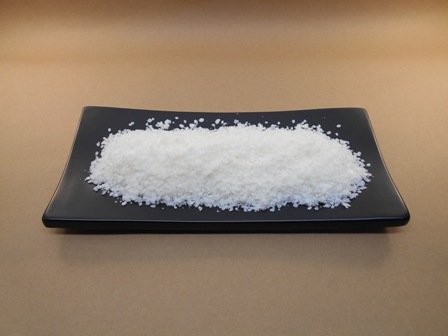
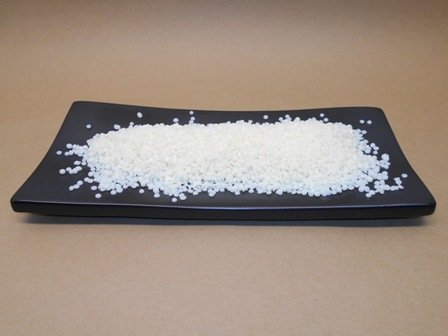
SOY WAX Candle Trouble Shooting
Always follow the Manufacturers recommended heating and pouring instructions .
All soy waxes are not hydrogenated and formulated to the same specifications so they will vary.
NEVER OVERHEAT OUR SOY WAXES AS THIS MAY CONTRIBUTE TO ALL THE PROBLEMS LISTED BELOW
1) Not a full melt pool or too deep of pool (ideal is 1/4” – 3/8” deep) or tunneling.
a) Wick may be to small or to large.
b) Be sure to have your test burn be of a long enough duration (larger diameter candles may take 4-5 hours). Don't blow out your candle until it has burned a melt pool all the way to the edge of the container. This can take 1 hour for each Inch across the widest section of the jar. Repeatedly blowing out your candle before the melt pool forms all the way across will cause tunneling.
c) For the same sized container you may need a smaller or a larger wick depending on the fragrance oil (fragrance oils have different weights. Some are light, some are heavy) and the amount of dye used.
d) Too much liquid dye added (maximum of 30 drops per pound) this can clog the wick
e) Too much fragrance oil. Although The wax can hold 10% we recommended 7% (by weight) .
2) Poor fragrance throw
a) Not enough fragrance oil or to much fragrance oil added to the wax (we recommended 7% by weight). Always use weight measurement on a scale and not volume, as in tablespoons, as fragrance oil weights by volume vary greatly.
b) Fragrance oil added at too high of temperature. At really high mix temperatures over 160 degrees you can lose allot of your scent out into the air while waiting for the wax to cool before pouring. Try 130-150 degrees.
c) Fragrance oil not fully mixed with the melted wax or settled. We find we get better hot throw when mixing at lower temperatures of 130-150 degrees, but you must gently stir longer to be sure the fragrance oil fully mixes with the soy oil, or melted wax. At first your fragrance oil goes in cloudy, but as it mixes the oil becomes clear again. You know your oil has settle to the bottom of the candle after pouring if you get poor hot throw when burning the top part of your candle, but then you get great hot throw when burning the lower part of the candle. So always burn your testers all the way down.
d) Fragrance oil not formulated to be used in soy wax (soy burns cooler than paraffin so all oils that work in paraffin may not work well in soy wax).
e) Too small, or too large a wick, or wicks. The wick size is crucial to getting the proper melt pool and burn to produce the hot throw you want. Check for a Good Melt Pool with every fragrance. One wick may not be "the right wick" for every scent, even in the same container. When you have burned your candle one hour for every inch that your container is across, at it's widest point, (so if your container has a 2 1/2" opening but it is 3" across at it's widest, you should burn your candle for 3 hours to check the melt pool), your candle should have about a 1/2" melt pool. If you don't have a 1/2" melt pool, your wick is too small. If you have more than a 3/4" melt pool, your wick is too large.
If you have a good melt pool at the correct length of burn time but still lack the hot throw, drowned your wick in the melt pool (no smoke) and see if you can now small a stronger throw. That is usually an indication you need a slightly smaller wick. One that still produces the melt pool in the right amount of time but doesn't burn off all the good scent.
3) Fragrance oil leeching out of the wax
a) Too much fragrance oil (we recommended 7% by weight)
b) You can expirement with adding your oil at 175-180 degrees. This expands the wax molecules and allows a better bond between the fragrance and wax molecules but you may see a decrease in hot throw.
4) Poor glass adhesion (wet spots)
a) Wax poured at too high of temperature (when wax cools it shrinks and the hotter it is poured the more it shrinks)
b) The area you are pouring in is too cool. (soy wax seems to pour best when the ambient temperature is between 67 – 75 degrees F.)
c) The inside of the glass container isn’t clean.
d) We do not recommend preheating your containers before pouring
5) Frosting (colored candles turning white)
a) Pouring at too high of a temperature (always pour soy wax at the coolest possible temperature)
b) 100% Soy wax has a tendency to frost more than soy blends (our Millennium Soy has other natural (no paraffin) additives blended with the Soy to lessen this issue)
6) Rough tops after pouring
a) Pouring at too high of a temperature (always pour soy wax at the coolest possible temperature)
b) 100% Soy wax has a tendency to have rougher tops than soy blends (our Millennium Soy has other natural additives blended with the Soy to lessen this issue)
7) Rough tops after burning and resolidifying
a) This is natural for Soy Wax candles and when relit it will return to a nice liquid melt pool.
8) Wick mushrooming or smoking
a) Mushrooming seems to occur with most natural wicks (we don’t worry about this, just remind your customers to trim to .25” (1/4") before relighting)
b) Excessive smoke can be caused by too large of a wick or the candle is sitting in a drafty area (drafts supply more oxygen than the wick can burn causing incomplete combustion)
c) To much fragrance oil
9) Miscellaneous
a) Can Soy Wax be heated in a microwave oven?
Yes, but we don’t recommend it as it is difficult to control the temperature.
b) Does Soy Wax work for novelty candles?
No as it is too soft.
c) Does Soy Wax work for pillars or tapers?
Pillars No, it is too soft. Some Chandlers have had success adding palm wax to harden votive wax for short wide pillars but proper wicking is critical.
d) What causes votives and candles to crack?
Cooling to fast. Try warming the room you work in, make sure your jars are at room temperature and put some cardboard or newspaper to insulate the molds and containers from tile or granite countertops that can cause uneven cooling.
e) Can you make floaters and tarts with Soy Wax.
Yes, we recommend using Votive wax as this will release easier from your molds.